
Mastering Wildlife Photography: The Ultimate Hide Setup Guide
One of the most effective ways to capture stunning images of elusive animals is by using a wildlife photography hide setup. A well-prepared hide allows photographers to remain concealed while observing and photographing wildlife in its natural habitat. In this guide, we will explore the essential components of a successful photography hide setup, including the importance of stability, camouflage, and ethical considerations.

Understanding the Wildlife Photography Hide Setup
A hide setup is designed to observe and photograph animals without disturbing them. Hides can be permanent structures or temporary setups, depending on the location and subject. The primary advantage of an effective hide setup is the ability to get close to wildlife without causing distress, resulting in more natural and compelling images.
Choosing the Right Hide
Selecting the ideal location for a wildlife hide setup is crucial for successful wildlife photography. Consider the following factors:
- Animal Habits: Research the behaviour and movement patterns of your target species.
- Natural Cover: Utilise existing vegetation or terrain to blend the hide into the surroundings.
- Lighting Conditions: Position the hide to take advantage of natural light, avoiding harsh shadows or backlighting.
- Accessibility: Ensure the location is reachable without causing disruption to the environment.
Essential Equipment for a Hide Setup
A well-equipped wildlife photography hide setup enhances stability and comfort, allowing photographers to focus on capturing the perfect shot. Key components include:
1. Camera Hide Plate
The camera hide plate provides a stable base for your camera and lens, ensuring sharp images even in challenging conditions. Unlike bulky tripods, my camera hide plate is compact and lightweight, making it ideal for confined spaces within hides. Features to look for in a hide plate include:
- Lightweight Design: Reduces the burden of carrying heavy equipment.
- Adjustable Feet: Ensures stability on uneven surfaces.
- Waterproof Coating: Protects against moisture and prolongs durability.
2. Camouflage Gear
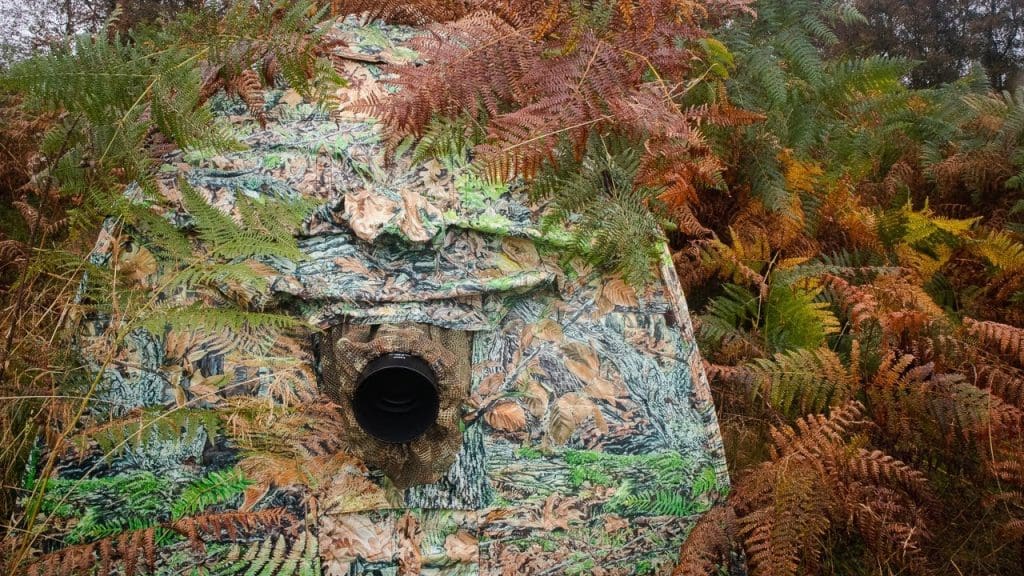
Effective camouflage helps photographers remain unnoticed by wildlife. Consider using:
- Camouflage Netting: the photography hide setup helps blend it into the environment
- Ghillie Suit: Provides personal concealment when outside the hide
- Muted Clothing: Avoids bright colours that may alert animals
3. Comfortable Seating
Spending hours in a photography hide requires a comfortable seat to maintain focus and patience. Go for:
- Portable Camping Chairs: Lightweight and easy to transport.
- Cushioned Mats: Provide additional comfort for extended sessions.
4. Lens and Camera Setup for the Wildlife Photography Hide Setup
Choosing the right camera and lens combination is essential for capturing detailed wildlife images within a hide setup for wildlife photography Consider:
- Telephoto Lenses: Allow close-up shots without disturbing the subject.
- Fast Shutter Speeds: Freeze motion and prevent blur.
- Silent Shooting Mode: Minimises noise that could startle animals.
Ethical Considerations in Wildlife Photography
Responsible wildlife photography prioritises the well-being of animals and their habitats. Follow these ethical guidelines:
- Respect Wildlife: Avoid disturbing animals or altering their behaviour.
- Minimise Impact: Leave no trace and avoid damaging the environment.
- Follow Local Regulations: Adhere to laws and guidelines for wildlife photography.
Conclusion
A well-planned wildlife photography hide setup enhances the chances of capturing breath-taking images while respecting nature. By investing in the right equipment, such as a camera hide plate, and following ethical practices, photographers can create a stable and effective hide environment. Whether you are a beginner or an experienced photographer, mastering good hide setups opens up new opportunities to document wildlife in its most authentic form.